Tablespoon to Grams: Yeast Conversion Guide (Dry & Instant)
1 tablespoon of active dry yeast weighs about 9–10 grams. Instant yeast is slightly lighter. Packet conversions, fresh yeast swaps, and a free calculator.
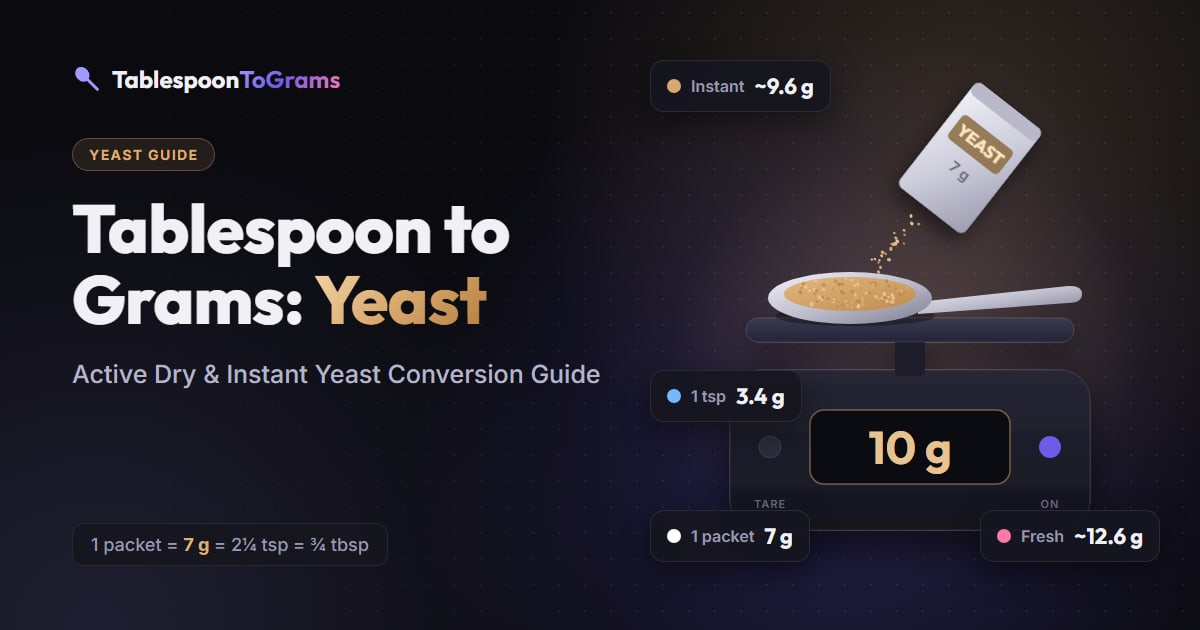
Quick answer: 1 tablespoon of yeast = 9–10 grams
1 tablespoon of active dry yeast weighs about 9–10 grams.
Two numbers circulate, and both are defensible:
- 9.3 g from packet math. A standard packet holds 7 g and measures 2¼ teaspoons, which is ¾ of a tablespoon.
- 10.1 g from density (0.68 g/ml in a US spoon). Granules settle differently from brand to brand.
Instant yeast is a touch lighter, about 9.6 g per tablespoon, since its granules are finer. Fresh yeast, crumbled, runs about 12.6 g per tablespoon.
Pick your yeast and spoon size below.
Yeast Converter
3 items · Density varies by itemActive dry vs. instant yeast: does the type change the weight?
Barely. Both are the same organism, dried and packed into granules. What differs is the size of those granules and how much air sits between them.
Active dry yeast has larger, coarser granules. Older recipes tell you to dissolve it in warm water first, though most modern brands work stirred straight into flour.
Instant yeast (sold as fast-action, quick-rise or bread machine yeast) is milled finer. The small grains pack closer together, and they dissolve without any soaking.
Finer grains would normally weigh more per spoon, not less. Instant yeast comes in slightly lighter anyway, since the drying process leaves it a little less dense. The gap works out to about half a gram per tablespoon. You can swap them spoon for spoon without a problem.
What does differ is strength. Instant yeast has more live cells per gram, so many bakers use about 25% less of it. If a recipe calls for 10 g of active dry, 7.5 g of instant does the same job.
This is why bread recipes give yeast in grams more often than in spoons. A gram is a gram. A spoonful of yeast depends on the brand, the granule size, and how you filled the spoon.
Yeast tablespoon to grams table
| Yeast type | Density (g/ml) | US tbsp (14.8 ml) | UK / metric tbsp (15 ml) | 1 tsp |
|---|---|---|---|---|
| Active dry yeast | 0.68 | 10.1 g | 10.2 g | 3.4 g |
| Active dry (packet math) | ~0.63 | 9.3 g | 9.5 g | 3.1 g |
| Instant / fast-action | ~0.65 | 9.6 g | 9.8 g | 3.2 g |
| Fresh / cake yeast, crumbled | ~0.85 | ~12.6 g | ~12.8 g | ~4.2 g |
The packet row comes from the label itself: 7 g per packet, 2¼ teaspoons per packet. That’s the number to trust when a recipe was written around packets.
Rows marked with ~ are close estimates. Yeast granules vary by brand more than most ingredients, which is the whole reason the two figures above don’t agree.
Australian tablespoons hold 20 ml, so a tablespoon of active dry yeast there weighs about 13.6 g. That’s over a third more than a US spoon. With yeast, that gap changes how fast your dough rises.
Yeast packets in tablespoons and teaspoons
The standard packet is the most reliable measure in this whole post, since the weight is printed on it.
| Packets | Grams | Teaspoons | Tablespoons |
|---|---|---|---|
| ¼ packet | 1.75 g | ~½ tsp | — |
| ½ packet | 3.5 g | 1⅛ tsp | — |
| 1 packet | 7 g | 2¼ tsp | ¾ tbsp |
| 2 packets | 14 g | 4½ tsp | 1½ tbsp |
| 3 packets | 21 g | 6¾ tsp | 2¼ tbsp |
A US packet is ¼ oz, which rounds to 7 g. UK and European sachets hold 7 g too, so the same math works on both sides of the Atlantic. Jars of yeast hold 113 g (4 oz), which is about 16 packets.
If a recipe says “1 packet” and you’re working from a jar, measure 2¼ teaspoons. Don’t use a heaped tablespoon and hope.
Why yeast is the one to measure carefully
With most ingredients, being a gram off changes nothing. A gram of flour in a loaf is invisible. Yeast is different, since the quantities are so small. Miss by 2 g on a 7 g packet and you’re off by nearly 30%.
Here’s what that does:
- Too much yeast: the dough rises fast, then runs out of food and collapses. The crumb turns coarse and open, and the bread tastes yeasty or beery. Over-risen dough tears easily when you shape it.
- Too little yeast: the dough sits there. A loaf that should double in an hour takes three, and if you bake it on schedule anyway, you get a dense, tight crumb.
Bakers usually set yeast as a percentage of the flour weight. About 1% instant yeast is a normal figure for a straight dough. So 500 g of flour takes about 5 g of instant yeast, which is 1½ teaspoons, or half a tablespoon.
Warm kitchens need less yeast, cold ones more. A long, slow rise in the fridge can use a quarter of the usual amount. This is one ingredient where a kitchen scale earns its price.
Two other things push a dough around as much as yeast does: salt slows fermentation, and water temperature sets the pace. Measure all three and your rise times stop being a surprise.
Yeast tablespoon to grams chart
Yeast amounts tend to be small, so this chart runs in quarters rather than whole spoons.
| Tablespoons | Active dry (US) | Active dry (UK) | Instant (US) | Fresh, crumbled (US) |
|---|---|---|---|---|
| ¼ tbsp (¾ tsp) | 2.5 g | 2.6 g | 2.4 g | 3.1 g |
| ½ tbsp (1½ tsp) | 5.0 g | 5.1 g | 4.8 g | 6.3 g |
| ¾ tbsp (2¼ tsp) | 7.5 g | 7.7 g | 7.2 g | 9.4 g |
| 1 tbsp | 10.1 g | 10.2 g | 9.6 g | 12.6 g |
| 1.5 tbsp | 15.1 g | 15.3 g | 14.4 g | 18.9 g |
| 2 tbsp | 20.1 g | 20.4 g | 19.2 g | 25.1 g |
The ¾ tbsp row is the packet row. Our density figure gives 7.5 g there, against the 7 g printed on the packet. That half-gram gap is the brand-to-brand spread in one number.
To go from grams to spoons, divide by 10 for active dry yeast in a US spoon. 15 g is about 1½ tablespoons. 5 g is about half a tablespoon.
Swapping fresh yeast for dry
Fresh yeast, sold as cake or compressed yeast, is a soft block that crumbles. Most of its weight is water, so you need more of it than dry yeast.
The working ratios:
- Fresh to active dry: use about 2 to 3 times the weight of fresh yeast.
- 1 US cake of fresh yeast (17 g, or 0.6 oz) replaces 1 packet (7 g) of dry yeast.
- 1 European cube (42 g) replaces 2 sachets (14 g) of dry yeast.
Both of those land in the 2.4:1 to 3:1 range. Start at 2.5× and adjust from there.
Fresh yeast dissolves in warm liquid and works fast, but it only keeps about two weeks in the fridge. Dry yeast keeps for months sealed, and years in the freezer. Most home bakers stick with dry for that reason alone.
Crumbled fresh yeast measures about 12.6 g per tablespoon, but it packs differently depending on how firmly you press it in. Weigh it if you can.
Frequently asked questions
How many grams is 1 tablespoon of yeast?
1 tablespoon of active dry yeast weighs about 9–10 g. Packet math puts it at 9.3 g, since a 7 g packet holds 2¼ teaspoons, and our density figure gives 10.1 g in a US spoon. Instant yeast weighs slightly less, about 9.6 g per tablespoon.
Is instant yeast the same weight as active dry yeast?
Close, but not identical. Instant yeast has finer granules and weighs a little less per spoon, about 9.6 g against 10.1 g for active dry. The gap is small enough to swap them spoon for spoon. Instant yeast is stronger, so many bakers use about 25% less of it by weight.
How much is a packet of yeast in tablespoons?
One standard packet of yeast holds 7 g, which is 2¼ teaspoons or ¾ of a tablespoon. Two packets make 14 g, or 1½ tablespoons. A packet is ¼ oz in the US, and UK and European sachets hold 7 g too.
More tablespoon to grams conversions
- Yeast tablespoon to grams calculator: converter, formula and a full conversion table for active dry yeast.
- How many grams are in a tablespoon?: the full guide for every common ingredient.
- Flour tablespoon to grams (plain, all-purpose & UK flour): the other half of any bread recipe.
- Water, milk & oil tablespoon to grams: for the liquid in your dough.
- Sugar tablespoon to grams (white, brown & powdered): what feeds the yeast.
- Tablespoon to grams calculator: convert 35 ingredients both ways.